Market fluctuations, seasonal demand, emerging technology: self storage operators have a lot of changing factors to keep up with.
But among all the different market dynamics in the industry, competing with real estate investment trusts (REITs) might be the most pressing.
These publicly traded companies have vast resources that independent operators often can’t match. And they keep growing.
So if you’re an independent operator, how do you compete? Thankfully, there are ways that local facilities can outmaneuver the enterprise competition.
Here are a few methods for competing against REITs when they set up shop in your local market.

When you look at the marketing reach of a national REIT, it’s easy to feel outmatched. They have the capital to blanket entire regions with ads, securing visibility that most independent operators can’t buy.
But that scale comes with a hidden cost: rigidity.
To manage hundreds of facilities efficiently, corporate marketing teams have to rely on standardized, broad-stroke campaigns. This gap in their strategy is your opportunity.
As an independent operator, you don't need to reach everyone; you just need to reach the right people in your immediate radius. While they broadcast to the masses, you can focus on being the obvious choice for your specific neighborhood.
Here is how to build a marketing strategy that leverages your local presence to outmaneuver their marketing budget.
REITs are generally locked into their national branding. Whether a facility is in Miami or Minneapolis, it looks exactly the same. You, however, have the flexibility to mirror the identity of your specific community.
This starts with your name. Since the majority of tenants live within a three-to-five-mile radius, your brand should reflect that territory. Name your facility after a specific submarket or well-known district to strengthen your self-storage local SEO strategy.
For example, Metairie is a suburban community outside of New Orleans. The search term “self storage metairie” has over 400 searches a month.

If your facility includes “Metairie” in its name, you’ll be best positioned to rank for those local searches and appear highest in local SEO results.
It creates instant familiarity. When a potential customer searches for storage, they aren't just looking for space; they are looking for convenience. A local name tells them you are right around the corner.
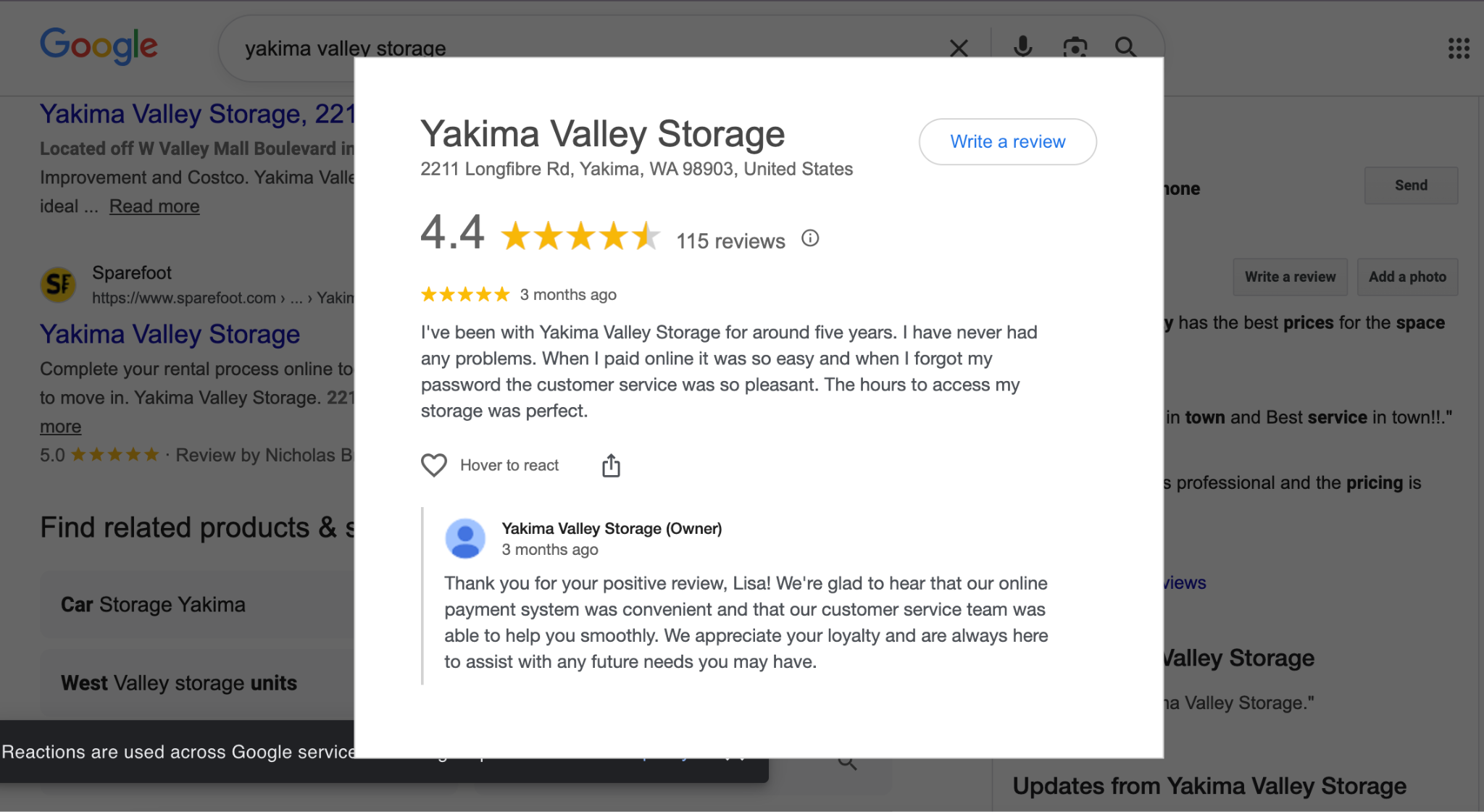
While brand recognition is powerful, proximity is the ultimate deciding factor. In fact, most rentals begin on a mobile device with a generic query like “storage near me.” To capture this traffic, you don’t need a national website; you need a dominant Google Business Profile (GBP).
While REITs often have standardized, corporate listings, yours can feel alive and specific.
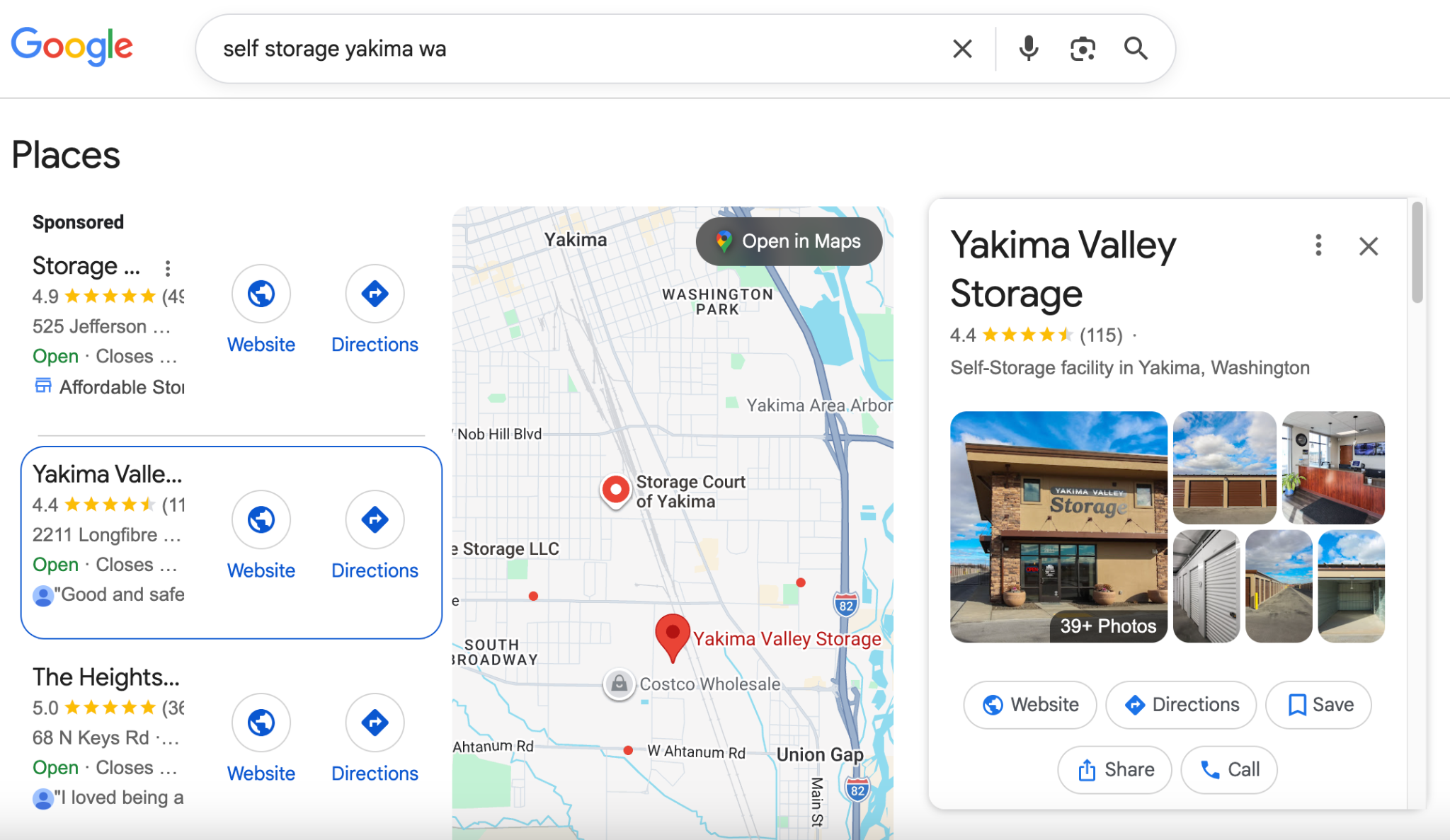
Reviews are the currency of trust in the storage industry, and this is an area where REITs often struggle. Large operators frequently suffer from "review fatigue"—dozens of 3-star ratings complaining about call centers, rate hikes, or automated systems.
Reviews are also one of the few marketing channels where local operators can consistently outperform national brands, especially when supported by tools designed to make review generation and response more intentional.
But acquiring the review is only half the battle. A great way to differentiate yourself is how you respond to them.
REITs often use automated software to reply to feedback with generic scripts like "Dear Valued Customer, thank you for your feedback." This feels cold and disconnected. You can compete by replying personally to every single review with actual context.
Don't just say "Thanks." Add a detail that proves you know the situation.
Not only are prospects reading your reviews and looking at the star rating, but they are also reading your replies. Seeing an active, engaged owner proves that you are invested in your customers—something a corporate algorithm simply cannot do.
Pricing is often the battlefield where independent operators feel the most pressure. When a REIT drops a new facility in your market, they often bring aggressive, algorithm-driven pricing strategies that can feel impossible to compete with.
But it’s important to understand why they price this way.
REITs operate on a "churn and burn" model. Because they manage portfolios with thousands of units, they treat tenants like data points. Their goal is volume.
They can afford to offer rock-bottom "teaser rates" to get bodies in the door because their automated systems will aggressively hike those rates a few months later. If a tenant leaves, they have the marketing budget to replace them.
You cannot play this game, and you shouldn’t try.
As a local operator, your goal isn't just occupancy; it's retention. You don't have the luxury of burning through customers, but you do have the luxury of building trust. While REITs compete on "pricing power" (who can go lower), you can win by competing on pricing discipline.
Here is how to stabilize your revenue without racing to the bottom.
REITs are notorious for offering low promotional rates and then rapidly raising prices once the lease is signed. While this causes high churn for them, it creates a massive opportunity for you.
If a prospective tenant mentions that a competitor down the street is offering a cheaper rate, don’t panic. Instead, use it as an educational moment to highlight your transparency.
Most tenants assume the price they sign up for is the price they will pay for the long haul. You can win their trust by explaining that the promotional rate they’re seeing isn’t what they’ll be paying for long. It may seem cheap now, but it won’t stay that way.
Of course, you want to handle the types of conversations with care. You don’t want to come off as disparaging of a competitor. But if you educate your audience on your pricing model versus the REITs approach, you can frame your facility as a better long-term option.
Think of this tactic as jujitsu, where you use your opponent's strength against them.
While you want to distinguish yourself from the "churn and burn" tactics of the giants, that doesn’t mean you should never raise rates. Expenses go up, and your revenue needs to keep pace. The difference between you and a REIT is not if you raise rates, but how you execute it.
REITs typically use automated algorithms to push aggressive rate increases across thousands of units, regardless of the tenant's specific situation. This blanket approach ignores the customer relationship.
As an independent, you can practice smarter ECRI (Existing Customer Rate Increases). This means looking at the data before you act. Instead of a massive spike that shocks a tenant into moving out, consider smaller, more reasonable increases that bring a tenant up to market rate over time.
This disciplined approach allows you to capture necessary revenue growth without damaging retention. It prioritizes the Lifetime Value (LTV) of the customer rather than a short-term cash grab.
It costs significantly less to keep a good tenant at a fair rate than it does to market for a new one to replace them, so let your pricing strategy reflect that reality.
Watch as our CEO Peter Smyth breaks down how to practice smart ECRI:
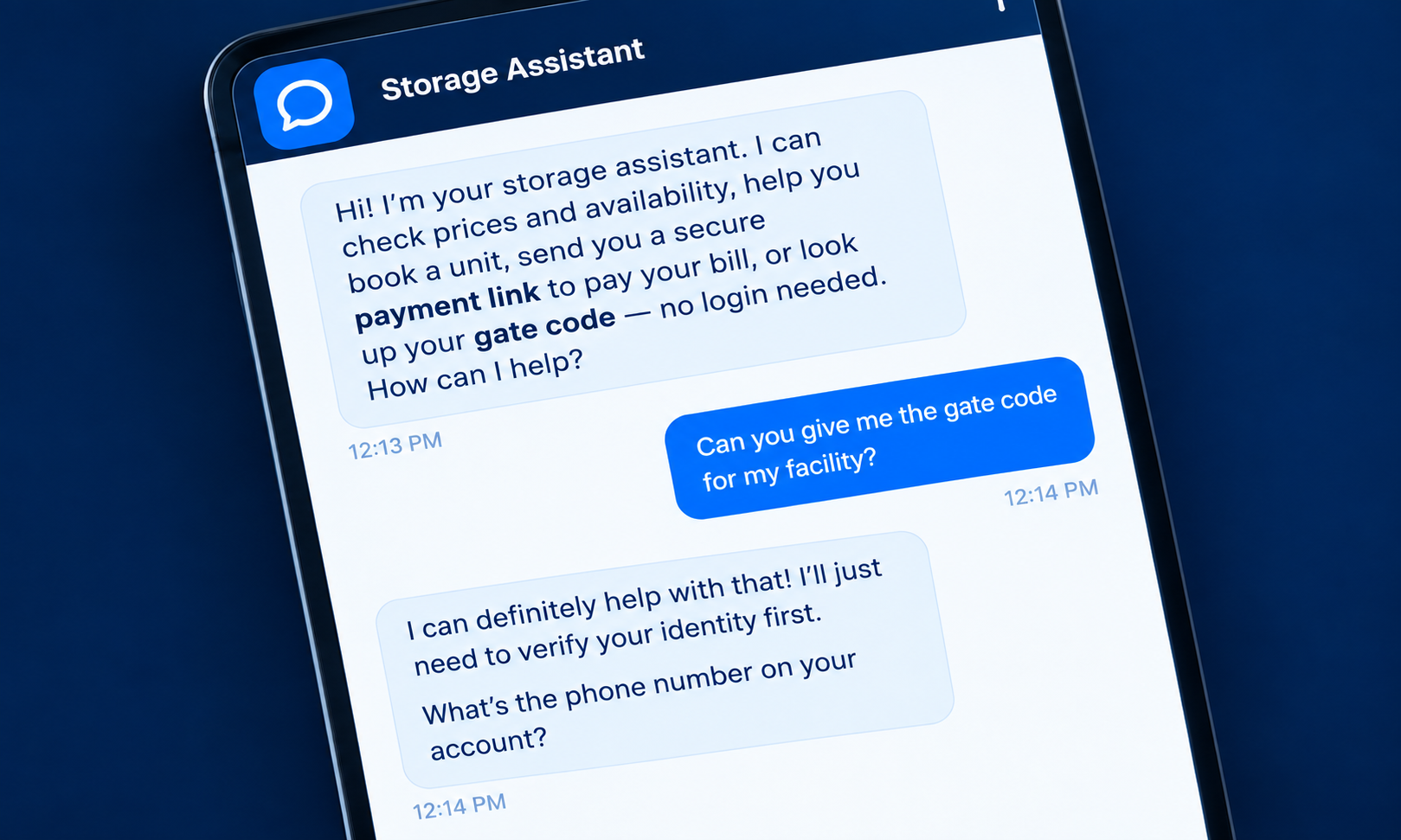
While REITs have massive budgets for technology, their scale often forces them to prioritize efficiency over connection. To manage thousands of facilities, they rely heavily on rigid automation and complex phone trees that can unintentionally build a wall between the tenant and the operator.
The result is often a service experience that feels disconnected—where a customer is just a ticket number in a queue.
This creates a distinct opening for independent operators to make accessibility a competitive advantage. Renters want confidence if they have a problem, they can actually reach a human that will help them.
REITs spend millions on digital advertising to acquire new tenants. As a local operator, you have a much more cost-effective acquisition channel sitting right inside your facility: your current customers.
Word-of-mouth is the most powerful form of marketing, and a warm lead from a trusted friend converts much faster than a cold click on a Google ad. While corporate chains might send out generic, automated referral emails that usually get buried in a spam folder, you can build a referral program that feels personal and community-driven.
By turning your best tenants into local advocates, you create a self-sustaining marketing loop that corporate ad budgets simply cannot buy.
Even with their resources, REITs can suffer from slow response times due to the sheer volume of inquiries they process. While they certainly have the manpower to answer calls, they often rely on centralized queues and automated phone trees to manage the traffic.
As a result, it is not uncommon for a tenant to get stuck in a loop of automated menus without ever reaching a person, or to leave a message that sits in a ticket queue for days. This lack of a "front door" is a major friction point for customers who need immediate answers.
Response time is the primary factor in how customers rate the service they receive, so to compete, you need to strive for same-day follow-up. The more responsive you are, the more likely you are to close leads who call in looking to rent a unit.

Finally, don't let the REITs' capital intimidate you. They can afford to retrofit entire portfolios with high-tech gadgets, but you don't need to match every bell and whistle to compete. You just need to match the ones your customers actually care about.
To find out what your tenants really want, just ask. Send an email survey and ask what improvements tenants would like to see. Do they care about Bluetooth locks, or do they focus more on better lighting or a fixed pothole?
When you make improvements based on direct feedback, you prove that you are listening; it’s a level of responsiveness that builds long-term loyalty.
Competing with REITs in 2026 requires discipline, not just strategy.
It requires a shift in mindset: moving from reactive to proactive. You have to constantly monitor local search trends, adjust rates with precision, and ensure every tenant interaction is high-touch. Independent operators who commit to this daily grind can absolutely win.
That's where a third-party self storage management company comes in. If you’re looking for some help to compete with REITs, schedule a free demo with our team. Discover how we’re helping operators across the country maintain their occupancy and increase profitability even when REITs enter the market.